How to play Mahjong solitaire
A single rule sits at the heart of the game: match two free, identical tiles. This guide turns that one rule into a confident first board — what to look for, how matching works, and a few habits that make clearing the turtle feel easy.
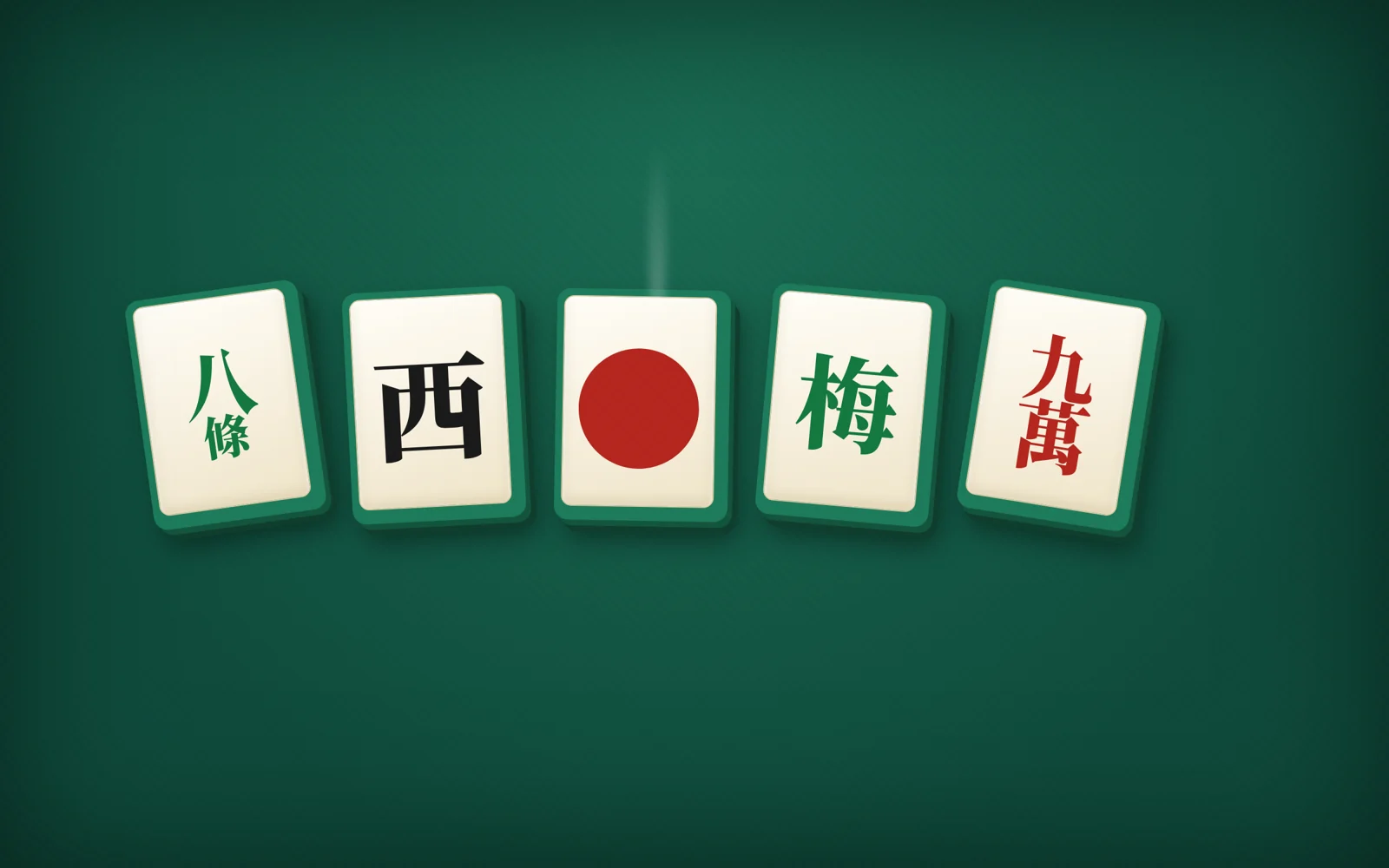
The goal
You are given 144 tiles stacked into a layered shape. The goal is to remove every tile by matching them in pairs. Clear the whole board and you win; the brewing meter on our board fills to 100% as you go.
What makes a tile "free"
You can only play a tile that is free. A tile is free when both of these are true:
- Nothing is on top of it. If another tile rests even partly over it, it is covered.
- One long side is open. Its left edge or its right edge must not be touching another tile on the same layer.
A tile can be hemmed in on both sides and still be blocked even with nothing on top. On our board, switch on Highlight free tiles and the playable tiles stay bright while blocked ones dim — a quick way to train your eye.
How matching works
Two free tiles can be removed when their faces match. Most tiles match only their exact twin, with one generous exception for the bonus tiles:
| Tile type | Matches with |
|---|---|
| Circles, Bamboo, Characters (1–9) | The identical tile — same suit, same number |
| Winds (E, S, W, N) | The same wind |
| Dragons (Red, Green, White) | The same dragon |
| Flowers (梅蘭菊竹) | Any other Flower |
| Seasons (春夏秋冬) | Any other Season |
Not sure which face is which? Keep the tile guide open in another tab.
Playing your first board
- Scan the top. The tiles on the highest layers are always free — they are a safe place to begin.
- Look for easy twins. Find two matching free tiles and select them one after the other. They lift away.
- Follow the opening. Each removal exposes new tiles. Chase the matches that open the most board.
- Work the edges inward. Long rows free up from their ends, so clear outward tiles to reach the middle.
- Finish the turtle. Keep pairing until all 144 tiles are gone.
Strategy for a clean clear
Matching is easy; finishing takes a little foresight. Three ideas carry most of the weight:
- Prioritise unblocking. When you can choose, remove the pair that frees the most trapped tiles, not just the first match you see.
- Mind your "fours." Most tiles have four copies. If three are visible and two are free, think before you take both — you may strand the fourth under a stack.
- Leave yourself options. Try to keep more than one possible move on the board at all times, so a single bad removal does not dead-end you.
Hint, Undo and Shuffle
Three tools keep the game fair and relaxed:
- Hint highlights a pair you can play right now — use it to confirm, not to replace, your own search.
- Undo reverses your last matches, so an impulsive move is never fatal.
- Shuffle rearranges the remaining tiles when you are truly stuck, always leaving at least one move.
Mahjong solitaire FAQ
What does 'free tile' mean in Mahjong solitaire?
Can every Mahjong solitaire board be solved?
What is the best first move?

Ready to try it?
Open a fresh board and put the steps to work. It is free, and there is nothing to install.
Play Mahjong Tea now