What is Mahjong?
A tile game born in Chinese tea houses, now played all over the world — at tables in fours, and alone as a quiet matching puzzle. Here is the short, friendly version of where it came from and how it works.
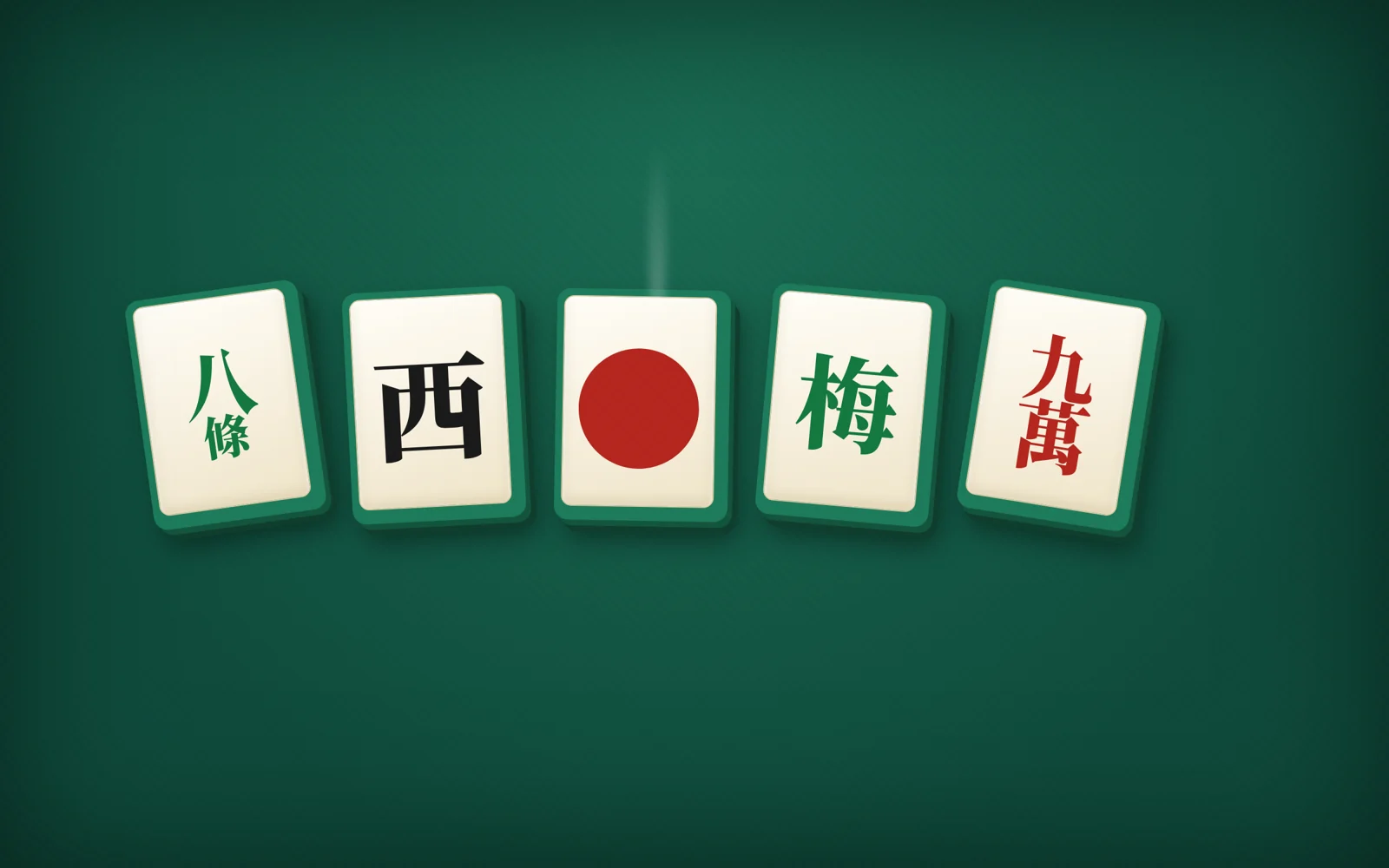
Where Mahjong came from
Mahjong (also spelled mah-jongg or májiàng) took its modern shape in mid-19th-century China, drawing on older card and domino games. It spread quickly through the tea houses and clubs of cities like Shanghai and Ningbo, and by the 1920s it had travelled to the West, where it became a parlour craze. Today it is played in many regional styles — Chinese, Japanese Riichi, Hong Kong, American and more — each with its own rules but the same family of tiles.
The 144 tiles
Every Mahjong game is built from one beautiful set of tiles. Learning the groups makes both the four-player game and the solitaire version far easier to read:
The three suits (number tiles)
Circles (dots), Bamboo (sticks) and Characters (the 萬 suit) each run from one to nine, with four copies of every tile. In solitaire you match a tile only with its exact twin.
The honour tiles — Winds and Dragons
The bonus tiles — Flowers and Seasons
There is just one of each Flower and Season. In solitaire they are the friendly tiles: any Flower matches any other Flower, and any Season matches any other Season. See them all in the full tile guide.
Four-player Mahjong
The traditional game seats four players around a square table. On your turn you draw a tile and discard one, slowly building a hand of sets — three-of-a-kinds, runs and a pair — much like rummy. The first to complete a legal hand calls "Mahjong" and wins. It is social, tactical and full of regional variation, which is why a game in Tokyo and a game in Hong Kong can look quite different while using the same tiles.
Mahjong solitaire
Mahjong solitaire — the game at Mashonga Tea — is a 20th-century invention that reuses the tiles for a calm, single-player puzzle. The 144 tiles are stacked into a shape such as the turtle, and you remove them two at a time by matching free pairs until the board is clear. There is no hand to build and no opponent; the challenge is purely in the order you open the layers. If you have never tried it, our how-to-play guide walks through a first board.
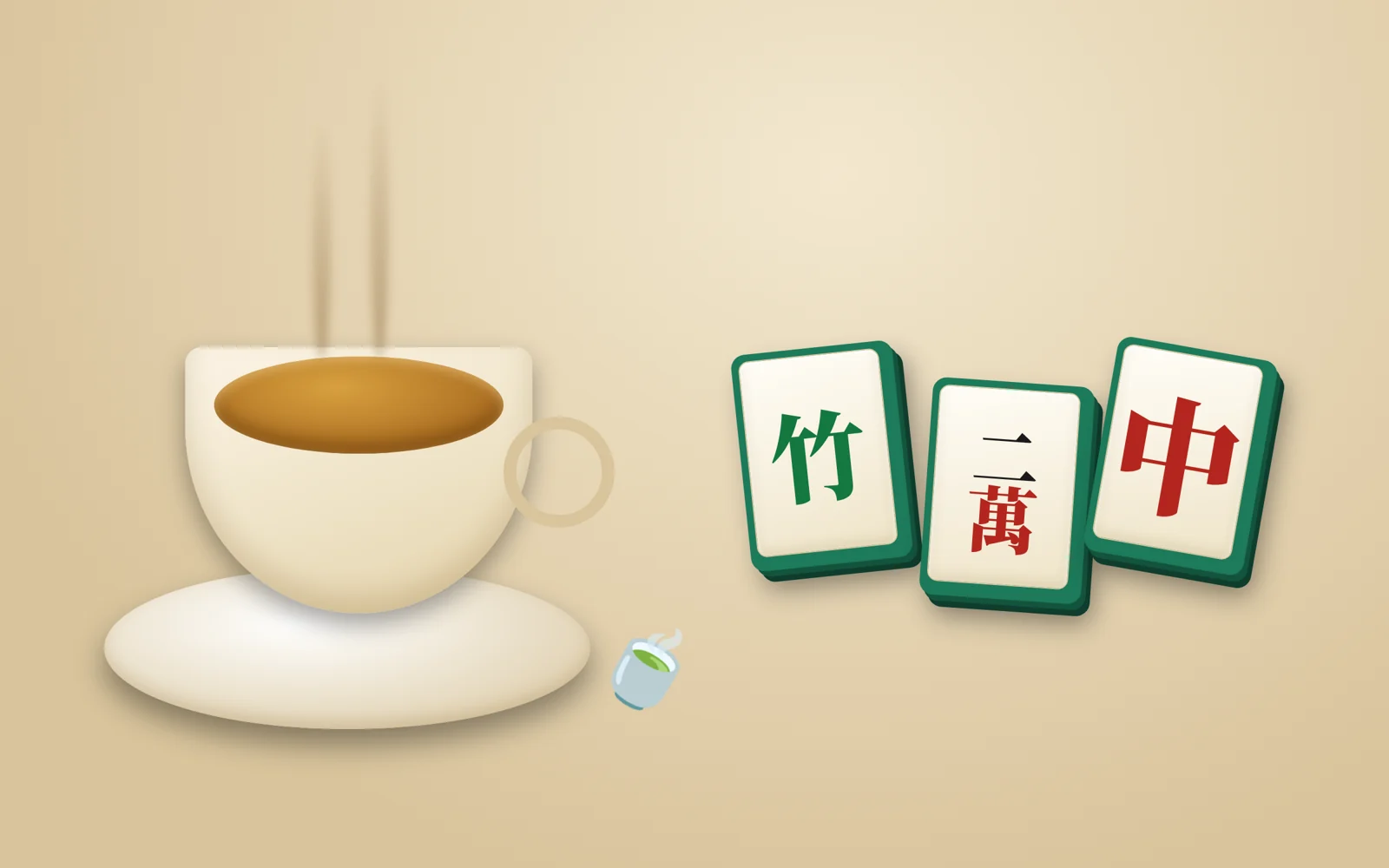
The tea-house connection
Mahjong and tea grew up together. The tea house gave the game its unhurried rhythm — long afternoons, refilled cups, and conversation between turns. Mashonga Tea leans into that heritage: the game you play here is meant to be slow and restful, something to pair with a brew rather than race against a clock.
Mahjong FAQ
Is Mahjong solitaire the same as real Mahjong?
How many tiles are in a Mahjong set?
Is Mahjong hard to learn?
See the tiles in motion
The quickest way to understand Mahjong is to play a board. It is free and takes a minute to pick up.
Play the Mahjong Tea game