The Mahjong tea towel, explained
Part kitchen linen, part love letter to the game. If you have searched for a Mahjong tea towel — to buy, to gift, or just out of curiosity — here is what the designs mean and how to pick a good one.
What a Mahjong tea towel is
A Mahjong tea towel is simply a kitchen towel — usually cotton or a cotton-linen blend — printed with imagery from the game. It belongs to the same family of "hobby" tea towels you will find for crosswords, chess or garden birds: a practical item that quietly signals an interest. For Mahjong players, it is a way to keep a favourite game in view between sessions, whether that game is the four-player version around a table or the solitaire tea game you can play here.
The "tea" link is older than it looks. Mahjong grew up in Chinese tea houses, where players gathered over pots of tea for long, sociable afternoons. A tea towel printed with tiles nods to that history — the game and the cup have always gone together, which is the same idea behind Mashonga Tea itself.
Popular designs
Most Mahjong tea towels fall into a few recognisable styles:
- The single hero tile. One large tile — often the Red Dragon (中) or the Green Dragon (發) — centred on a plain ground. Bold and easy to read across a kitchen.
- The tile grid. Rows of tiles arranged like a layout, showing off the three suits and the honour tiles together. Busy, colourful and unmistakably Mahjong.
- The suit sampler. A tidy line-up of Circles, Bamboo and Characters from one to nine, which doubles as a gentle reference for the suits.
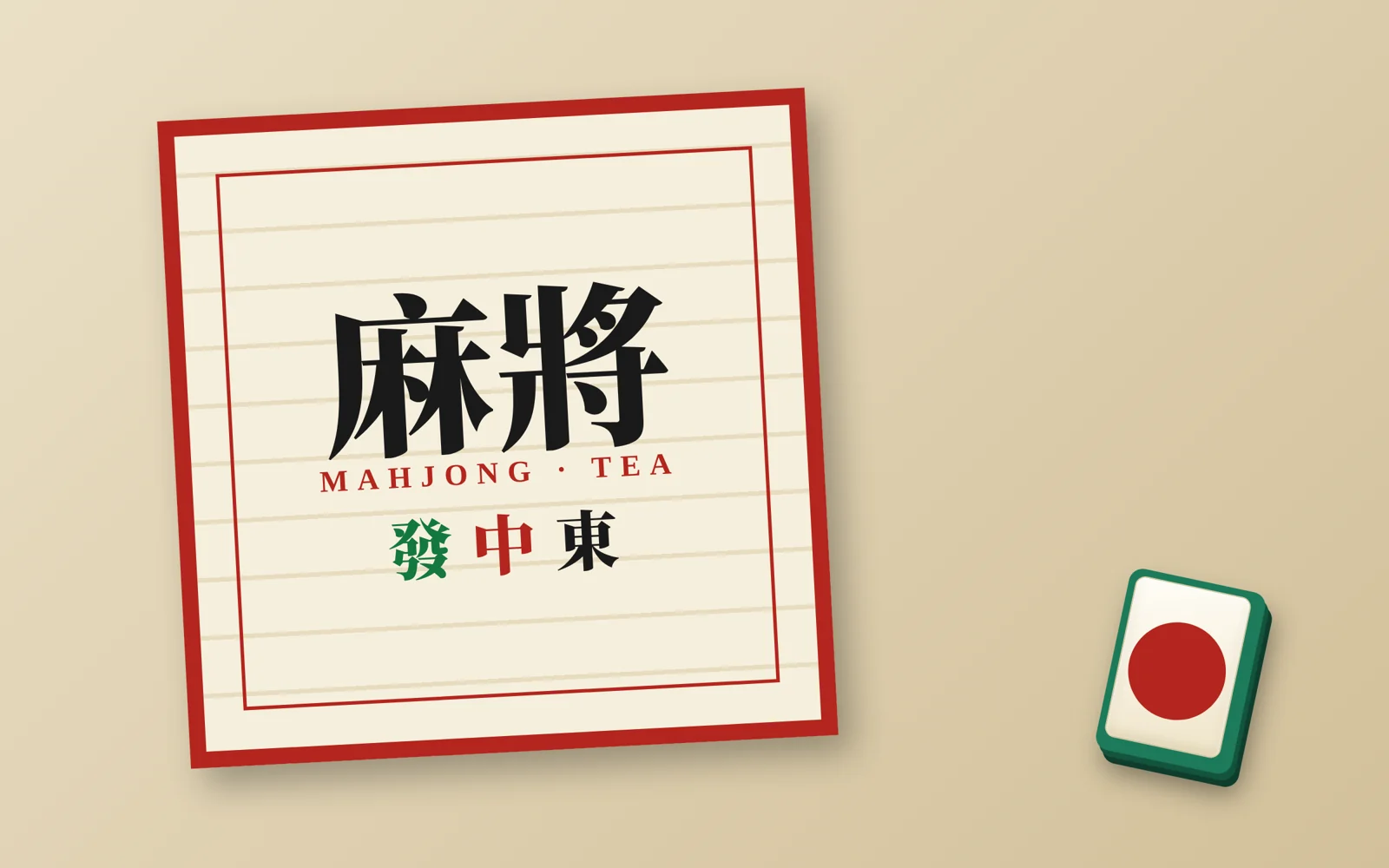
- Typographic. The word "Mahjong" or the characters 麻將 paired with a small tile or two — understated, and popular as a gift.
What the tile symbols mean
Half the charm of a Mahjong tea towel is the symbols, so it helps to know what you are looking at. A standard set has three numbered suits and two groups of honour tiles:
| Group | On the tile | Meaning |
|---|---|---|
| Circles (Dots) | Rings of coloured discs | Said to represent coins or copper cash. |
| Bamboo | Green sticks; the 1 is often a bird | Strings of coins, drawn as bamboo canes. |
| Characters | A number above 萬 (wàn) | "Ten thousand" — the highest-value suit. |
| Winds | 東 南 西 北 | East, South, West, North. |
| Dragons | 中 (red), 發 (green), blank | Red, Green and White dragons. |
| Flowers & Seasons | 梅蘭菊竹 · 春夏秋冬 | Four flowers and four seasons — bonus tiles. |
Our Mahjong tile guide shows every one of these faces if you want to match a towel design to the real tiles.
Choosing one as a gift
If you are buying for a player, a few small things make a Mahjong tea towel feel considered rather than generic:
- Pick a meaningful tile. The Red Dragon is a safe, striking choice; or match the recipient's "lucky" tile if they have one.
- Favour natural fibres. A cotton-linen blend drapes better and actually dries dishes, which a thin polyester towel does not.
- Check the print method. Reactive or screen prints on the fabric last far longer than a stiff patch of transfer ink sitting on top.
- Mind the size. Around 45 × 70 cm is the useful standard; much smaller and it becomes decorative only.
Caring for the print
A good tea towel should survive the kitchen. To keep the tiles looking sharp:
- Wash inside out at 30 °C with a mild detergent; avoid bleach and strong stain removers.
- Line-dry where possible — tumble heat is the main cause of cracked or faded prints.
- Iron on the reverse if needed, so the hot plate never touches the print directly.
- Give a brand-new towel a cool wash before first use to set the colours and soften the weave.
Mahjong tea towel FAQ
What is a Mahjong tea towel?
Are Mahjong tea towels a good gift for players?
How do I keep the print from fading?